


Frozen sections have long been a critical intraoperative service, but their value today extends far beyond margin verification. As surgical complexity and volume increase, the economics behind frozen sections are shifting, not because reimbursement is changing, but because there is often an inefficient use of pathologist time, which can limit opportunities for them to focus on skills that directly contribute to institutional revenue and patient care.
In a previous blog, we shared the technical workflow of frozen sections, their 20-minute turnaround expectations and how they verify margins rather than diagnosing malignancy.
This blog explores the real economics behind frozen sections, their current growth and how digital telemicroscopy strengthens both workflow efficiency and system‑level ROI.
Frozen Section Codes & Reimbursement
Frozen section CPT codes are consistent nationwide. The basics of these codes are as follows:
- 88331 for the first block
- 88332 for each additional block
Although CPT codes define how frozen sections are billed, they do not reflect the true economics of the service. Frozen sections are almost always a financial loss leader because pathologists spend significant non-productive time waiting for specimens to process. The true value of a frozen section lies in preventing repeat surgeries and supporting surgical decision-making, not in reimbursement.
The Growth and ROI of Frozen Sections
From a workflow perspective, frozen sections require substantial pathologist downtime.
The impact is particularly evident when pathologists must travel to provide frozen section services at remote hospitals. In a typical scenario, a pathologist may spend an hour traveling each way, followed by periods of waiting between specimen passes during surgery. This can result in nearly three hours of non-productive time for a single case.
Using a conservative midpoint estimate of approximately $500 per hour in professional value generation, the opportunity cost can exceed $1,000 per case. Reducing this inefficiency allows pathologists to spend more time on diagnostic activities that directly support patient care and institutional productivity.
Now, imagine the cases where patients who undergo surgery believe they found answers, only to learn days or weeks later that the margins were not clear and another stressful procedure is required. The pathologist is now required to travel back as part of the hospital’s coordination to re-book OR time, anesthesia, surgical staff and pathology coverage.
For the patient, the experience means another round of preparation and sedation, another recovery period, another disruption to work and family life and anxiety of facing surgery again. Preventing this scenario protects patients from unnecessary repeat procedures while helping hospitals maintain predictable and efficient surgical workflows.
And frozen sections are not necessarily financially attractive from a per‑case reimbursement standpoint. Instead, their value lies in system‑level ROI.
In a breast‑conserving surgery case study by Boughey et al., for example:
- Using frozen sections in 20% of lumpectomies generated $18.2 million in annual savings to payers and $0.4 million to providers.
- At 100% adoption, savings rose to $90.9 million to payers and $1.8 million to providers.
For pathology groups and hospitals, ROI depends on:
- Volume and case mix
- Coding accuracy: correct use of CPT codes
- Operational efficiency: faster frozen sections reduce OR delays
- Digital/AI tools: remote coverage and augmented interpretation reduce labor strain
Digital pathology and AI tools add costs, but they can improve pathologist productivity, expand coverage and reduce delays, all of which contribute to ROI.
How Mikroscan Supports Frozen Sections
Mikroscan was created to ensure that location no longer prevents experts from delivering the proper care. Our telemicroscopy and digital pathology systems are designed to support real-time clinician collaboration, including frozen section procedures.
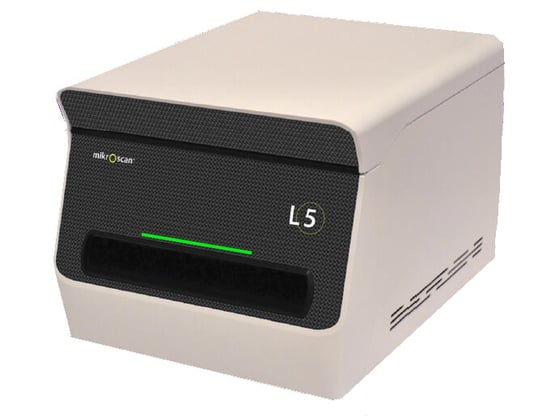
By eliminating pathologist travel and idle waiting, Mikroscan removes the largest economic drain associated with frozen sections and allows pathologists to remain productive until the moment the specimen is ready. With the L5, a pathologist can perform traditional microscope evaluations of glass slide specimens from any network-accessible location.
Frozen sections will always be an essential tool for surgical decision-making, but the way they’re delivered is improving. Distributed digital pathology is becoming a norm across facilities, and Mikroscan is helping lead that shift by ensuring that every hospital can access the pathology support that it needs.
If you’re ready to learn how Mikroscan can work at your facility, let’s connect!
